

Best Cancer Books – Our Top 10
“The important thing is to not stop questioning”
Albert Einstein.
There are so many books about cancer out there that it can be very overwhelming for patients who are seeking information on how to empower themselves in their cancer journey.
Out of the many books that I have read on cancer, there have been a few that really stand out as being worth having in your library.
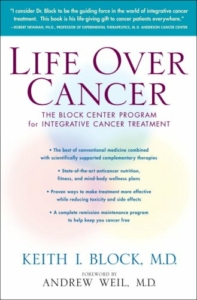
Life Over Cancer
Life Over Cancer – Keith Block
Dr Keith Block is one the most experienced and competent Integrative Cancer Specialists in the United States. He is a medical doctor with extensive experience in treating people with cancer. I came across Dr Blocks book “Life Over Cancer’ about a year ago, I started reading it and literally could not put it down. Keith offers the most practical advice on cancer treatments without the medical jargon which can confuse patients. While many books repeat the same information about cancer over and over, ‘Life Over Cancer’ is definitely not one of those books!
Dr Block keeps everything simple by arranging them into three main sections or ‘spheres’.
- Improving your lifestyle
- Boosting you Biology
- Enhancing you Treatment
In the first chapter, he discusses every aspect of diet and exercise for cancer patients. Dr Block also addresses caring for the spirit and how people can help themselves through the diagnosis. The second chapter focuses on making the body hostile to cancer growth.The chapter addresses inflammation, sticky blood, stress and the importance of the sleep cycle in cancer. Chapter three gets into the nitty gritty of how a person can optimise their standard of care treatments; the chapter includes ways to support and enhance chemotherapy and radiation. Support after surgery is also included in this chapter and has some precise information about the optimal timing of surgery and pre-prep and post-care.
Often patients are left hanging after their treatment ends. This time can fuel a patient’s anxiety, and many tell me they feel like they are ‘sitting ducks’. “Life Over Cancer” has a whole section on what to do when treatment ends so the patient can take charge and be proactive in their own treatment.
This book can be used as a reference book, and it is very relatable and easy to read. No technical jargon or medical speak. This book is worth every penny plus more!
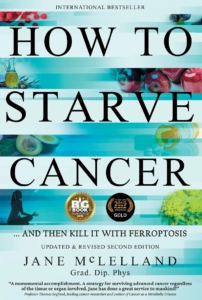
How to Starve Cancer
How to Starve Cancer – Jane McClelland
Where do I start with this book? Just amazing! Jane McClelland’s book ‘How to Starve Cancer” has been one of the most riveting and sensible books I have ever read on cancer. Jane is a lady who overcame her own diagnosis of Stage 4 lung cancer several years ago. She successfully treated her own cancer by tirelessly researching how she could block nutrition to cancer by using ‘off-label’ medications and supplements. The metabolic theory of cancer goes back over 100 years. This book has really brought the whole theory to life that cancer is a disease of altered cell metabolism, rather than a genetic or DNA mutation. The book starts off with Jane’s fascinating story; it truly reads like a novel. The rest of the book is very science heavy and is a credit to the depth of knowledge that Jane has amassed and shared for others to use.
Put very simply; cancer feeds from three main pathways, glucose, glutamine and fatty acids. It is commonly known that cancer uses glucose for fuel and this is demonstrated when a person has a PET scan, and a glucose-based dye is used. This glucose is carried into the cancer cells and then shows us how active the cancer is. The other pathways are less known, but we do know that cancer is ‘metabolically flexible’, meaning, it can switch from one fuel supply to another if need be. The idea of metabolic blocking is to block the fuel to the cancer cell to starve it. This starving of the cancer cell then makes it more vulnerable to killing therapies such as chemotherapy or radiation.
I have personally had experience with using metabolic blocking in integrative cancer care, and if done right, it can be very effective. Jane’s book can get a bit confusing for some; even people with science backgrounds can get overwhelmed. Some doctors can assist a person with metabolic-blocking drugs and supplements.
Cancer as a Metabolic Disease – Thomas Seyfried.
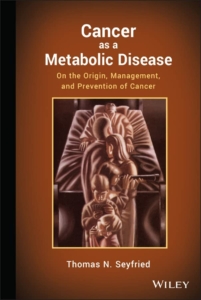
Cancer as a Metabolic Disease
This book is the ‘textbook’ on the metabolic theory of cancer. This book was published in 2012 and has become a mainstay reference book for practitioners and patients wishing to understand the science behind the metabolic theory of cancer. This book is very science heavy and can be hard to understand for the layperson.
The book starts off by explaining how cancer is viewed by the standard of care oncology. It follows by explaining the hallmarks of cancer. This is the book where you will find nitty-gritty information such as an in-depth look at the problems with cancer models, and problems with tumour classification and Seyfried also gives his personal perspective on the flaws with the science that conventional cancer treatments are based around.
There is a very intense chapter on the energetics of normal cells and cancer cells. If you would like to revisit the TCA, otherwise known as the ‘Krebs Cycle’, this book is for you! It covers all of the science to do with cell metabolism and energetics, whilst constantly comparing the behaviour and function of normal cells compared to cancer cells
The book covers the following topics in detail
- The Warburg Dispute
- Is respiration Normal in Cancer Cells?
- Is mitochondrial Glutamine Fermentation a Missing Link in the Metabolic Theory of Cancer?
- Genes, Respiration, Viruses and Cancer
- Respiratory Insufficiency, the retrograde response, and the Origin of Cancer.
- Mitochondria: The Ultimate Tumor Suppressor.
- Abnormalities in Growth Control, Telomerase Activity, Apoptosis and Angiogenesis Linked to Mitochondrial Dysfunction.
- Metastasis.
- Nothing in Cancer Biology Makes Sense Except in the Light of Evolution.
- Cancer Treatment Strategies.
- Metabolic Management of Cancer.
This book is worth its weight in gold and can be used repeatedly as a reference book. A true ‘go to’ for practitioners wanting to understand the metabolic theory of cancer. Once you read this book, there is no turning back…
Radical Remission – Kelly Turner.
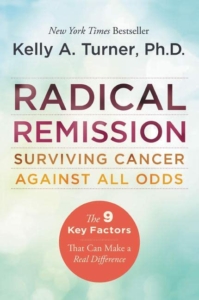
Radical Remission by Kelly Turner
Radical Remission is one of the first books I recommend to a person newly diagnosed with cancer. Cancer is such a complex and mysterious illness that has many factors which contribute to its beginnings. Many questions are just not answered, or scientifically proven at this point in regards to the emotional or trauma connection to cancer. This research has probably come the closest to what we already suspect: trauma, emotions and stress are most often linked to the onset of cancer. If we can acknowledge this, we can find ways to help to improve outcomes, and this is what Kelly Turner did.
Kelly’s research took her on a year-long trip around the world to interview twenty patients that had experienced radical remission. Although these remissions have been documented in science, science failed to ask any questions of the patient and the people that treated them. Kelly then documented these cases in the most beautiful way, and she also narrowed down nine key factors that all of these people had in common.
- Changing your diet
- Taking control of your health
- Following your intuition
- Using herbs and supplements
- Releasing suppressed emotions
- Increasing positive emotions
- Embracing social support
- Deepening your spiritual connection
This is a book that is truly worth reading and rereading!
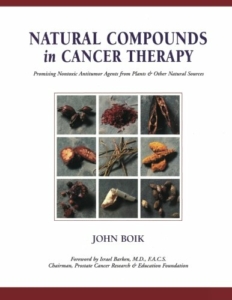
Natural compounds in cancer therapy
Natural Compounds in Cancer Therapy – John Boik
This excellent book is a great reference for many natural and non-toxic compounds used today as adjunct cancer therapy. An excellent reference book for any practitioner from doctors to Naturopathic Clinicians. This book does not focus on the metabolic theory of cancer but on the genetic theory.
The author has divided the chapter into three main sections.
Cancer at the Cellular Level
This chapter is quite science-heavy but well-referenced. It discusses many aspects of cancer formation and establishment, including cancer cell biology, angiogenesis, growth factors and cell-to-cell communication.
Cancer at the Level of the Organism.
This chapter comprehensively overviews angiogenesis and the natural inhibitors that can be used. Other topics included in the section are cancer invasion, metastasis, the immune system and natural compounds that affect the immune system.
Clinical Considerations.
This book is an excellent guide that provides a great deal of comprehensive and easy-to-understand information for practitioners. The chapter covers the following substances and their applications, supported by excellent scientific references.
- Trace Metals
- Vitamin C and Antioxidants
- Polysaccharides
- Lipids
- Amino Acids and Related Compounds
- Flavonoids
- Non-Flavonoid Phenolic Compounds
- Terpenes
- Lipid-soluble Vitamins
- Natural Compounds, chemotherapy and radiation
The Appendix of this book contains so many valuable resources. There is comprehensive information on Pharmacokinetics, Pharmacodynamics and Dose Scaling. It includes a comprehensive table explaining the Natural Compounds that can induce apoptosis in cancerous cells. Not for the layperson! An excellent source for Naturopaths looking for science-based research. The book also lists the names of many branded formulations that can help remove the stress of finding everything as a single substance.
Cracking Cancer Toolkit – Dr Jeffrey Dach
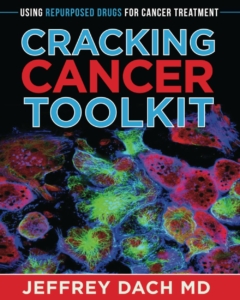
Cracking Cancer Toolkit
This textbook, written by Dr Jeffrey Dach, is a concise reference book that explains in detail repurposed medications used to block the metabolism of cancer cells. As repurposed medications for cancer are in the spotlight right now, this is one of the best reference books to find out how many there actually are and what they could possibly be used for. Dr Dach was motivated to write this book after three of his family members developed aggressive cancer. This book is a dark horse, a wealth of information, but not as well known as it should be.
There are a whopping 42 chapters in this book. The beginning of the book explains cancer as a metabolic disease and the ten hallmarks of cancer. Scientific studies in this book are well-referenced. Although thorough, the book is concise and gets to the point, providing excellent information without too much overload.
Cracking Cancer Toolkit presents a new approach to addressing all three pillars of cancer-cell metabolism.
- OXPHOS
- Glycolysis
- Autophagy
The substances that are covered in this book are as follows.
DCA, Propranolol, Alpha-lipoic Acid, IV Vitamin C, Doxycycline, Aspirin, Metformin, Boswellia, Cannabis, Artemisinin, Niclosamide, Mebendazole, Cimetidine, Beta-glucans, Vitamin D, Celecoxib, Statins and Dipyridamole.
This book is worth having as a reliable and comprehensive reference book.
The Immunotherapy Revolution – Jason Williams
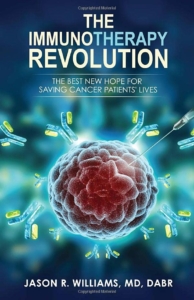
The immunotherapy revolution
For any person that is having Immunotherapy or considering Immunotherapy, this book is an absolute must! Dr Jason Williams is an absolute genius when it comes to an understanding and application of Immunotherapy. There are many things that a person embarking on Immunotherapy can do to prepare for success with their treatment. This book is written by a doctor, for the layperson. There is no technical jargon or confusing terminology, just down-to-earth information that any patient can take on.
Dr Williams explains Immunotherapy in simple terms, using analogies to make it crystal clear. He then talks about clever ways in which you can increase the effectiveness of Immunotherapy. One of the most interesting parts of Dr Williams book is the discussion on the gut and its role in the effectiveness of immunotherapy. He brings in credible research on the topic and gives simple and practical advice on preparing the gut for upcoming treatment. Dr Williams also discusses off-label medications and supplements that can enhance treatment effectiveness and also how to recognise any side effects of the therapy.
Dr Williams provides a pyramid plan at the end of the book that gives a simple outline to follow. An absolute must-have book for anybody that is considering immunotherapy. For more information, you can have a look at www.WilliamsCancerInstitute.com.
Naturopathic Oncology – Neil McInney
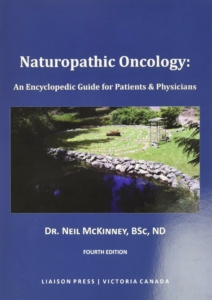
Naturopathic Oncology
This Naturopathic Encyclopedia is the top reference book you can invest in if you are a Health Professional treating people with cancer. Many of my patients own this book and use it regularly to assist themselves with their cancer treatment. It would be impossible to condense the information from this book into a simple overview, but I will try.
Neil McKinney’s book covers every possible aspect of Integrative Oncology, and most Integrative doctors I have worked with have also used this book as a reference.
Each section is chock full of excellent information that is backed by scientific references alongside Dr McInneys personal experience.
The book is sectioned into five parts:
Part One: Cancer Biology
Introduces basic concepts of oncology and naturopathic care in layman’s terms. Medical jargon can be the most significant stress to people who have been diagnosed with cancer, so starting the book off like this is pure gold! In these sections, there are remedies that are suggested for the most common cancers. This can be helpful to the patient to discuss with their treating doctor.
Part Two: Integrative Oncology
This section clearly explains how naturopathic care can support the standard of care Oncology treatments. This section discusses many aspects of supporting, optimising and reducing the side effects of chemotherapy, radiation and Immunotherapy. As medicine is moving so quickly, checking every treatment with your Integrative Doctor is always advisable.
Part Three: Naturopathic Oncology Remedies
This section covers the good details of naturopathic oncology support and the available treatments. Supported by excellent and credible research, Neil has made each therapy easy to understand. In this section, Dr McInney outlines the main remedies used for cancer and their ‘mechanism of action’, otherwise known as ‘how they work in the body’.
Part Four: Naturopathic Oncology Protocols – General and Cancer-Specific.
This section focuses on common cancers and provides standard protocols for each using a beautiful mix of science and Dr Mcinneys extensive experience. Mainstream Oncology is really moving to the arena of targeted therapies as an effective treatment. Neil McKinney also provides protocols for targeted therapies for each cancer which could be used alongside conventional treatment. McInney is generous enough to teach everything he knows, and you could not usually access this specific information unless you were working under a mentor.
Part Five: Preventing Cancer.
Another book that helps to look at the ‘next steps’ after treatment. This is the time patients tell me is the scariest as they usually don’t have any plans in place and feel like they are just waiting for the next scan. Dr Mcinney talks about every aspect of healing, including the spiritual which is very important when healing from cancer.
This book should be part of any practitioner and patient’s library. Neil makes a significant disclaimer in his book “Do use this book to be informed about your best options HOWEVER, get expert guidance from a health practitioner who is experienced in treating cancer. Cancer is unforgiving of delays and poor choices”.
Tripping over the Truth by Travis Christofferson.
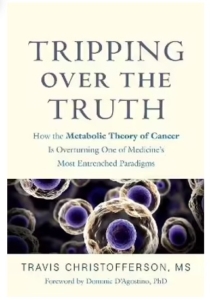
Tripping over the truth
This book had been suggested to me for years by patients. I finally purchased the book, and I was thrilled at the information provided as I genuinely support the metabolic theory of cancer.
The book’s first part makes you think about how far we have, or haven’t come with cancer treatment.
“In 1971 a cancer diagnosis was a terrifying experience. Patients felt helpless, out of control. Everything was put on hold as they waited, at the mercy of their Oncology team – surgeons, radiation oncologists, and chemotherapy nurses. In 2016 how much has really changed?”
This book is a detailed history of how cancer has been viewed, and subsequently, treated. The book explains in great detail, the work of Dr Warburg and his theory that cancer is in fact a metabolic disease. Thomas Seyfried, the author of ‘Cancer as a Metabolic Disease’ took the work of Otto Warburg and expanded upon it in fascinating, and also accurate, detail. Thomas Seyfried noted, across the board, that cancer cells have damaged mitochondria. Mitochondria are the little ‘powerhouse ‘ of the cell that generates energy, supplying energy for the body’s needs. His theory is that when the mitochondria are damaged, they send an SOS signal, asking for an emergency generator to be switched on. He believes that once this call is made, the DNA then responds and as a result, the entire make-up of the cell changes.
The book opens with a chapter about how cancer became known as a genetic disease and then ties in the history of the infancy of chemotherapy. Chapter three outlines a history of the breakthroughs and disappointments of many clinical trials focused on addressing the metabolic theory.
The book clearly and concisely explains the six hallmarks of cancer, otherwise known as ‘the seminal description of cancers personality”
- Cancer cells stimulate their own growth
- Cancer cells evade growth-suppressing signals
- Cancer cells resist cell death (apoptosis)
- Cancer can replicate and is immortal
- Cancer can induce the ability to grow new blood vessels, enabling the tumour to receive nutrients
- Cancer cells can spread to distant sites (metastasis)
This book contains a good section of information on the history and studies behind the ketogenic diet for cancer. Thomas Seyfried found that caloric restriction shrinks tumours. He worked on several ways of tweaking the diet to understand the response that it could have on cancer. He found that by restricting certain macronutrients, the cancer cell would respond.
This book is a treasure trove of credible information on the metabolic theory of cancer. It has incredible detail and is written in language that the layperson can understand. This book is a worthwhile investment and can be used as a reference.
Keto for Cancer – Miriam Kalamian forwarded by Thomas Seyfried,
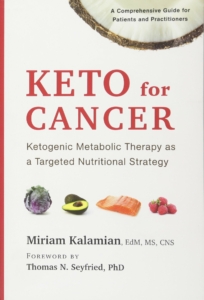
Keto for Cancer
Usually the first thing that patients ask in a consultation is, ‘What do I eat?!’ There are many things that must be carefully considered when choosing a diet for cancer. There is an overload of information available, and it just gets very confusing. The author of this book became aware of the ketogenic diet for cancer when she was searching for therapies for her young son who was diagnosed with a severe form of brain cancer. Mirian implemented the diet for her son and as a result, saw a miraculous improvement in his cancer which had been deemed ‘untreatable’
This book is empowering as it contains everything a person would need to know about cancer as a metabolic disease and how the ketogenic diet works for cancer. The book is written in an easy-to-understand way. It explains the metabolic theory of cancer so well that everyone from laypeople to medical professionals can understand the concept.
The practical guide on implementing the ketogenic diet is thorough and comprehensive, without being confusing. The book has comprehensive information on how to get started, creating a personal plan, how to plan for success, meal templates, supplements and dealing with the challenges of implementing the ketogenic diet.
This book is an absolute must-have for anybody interested in a comprehensive education on the ketogenic diet for cancer.


